

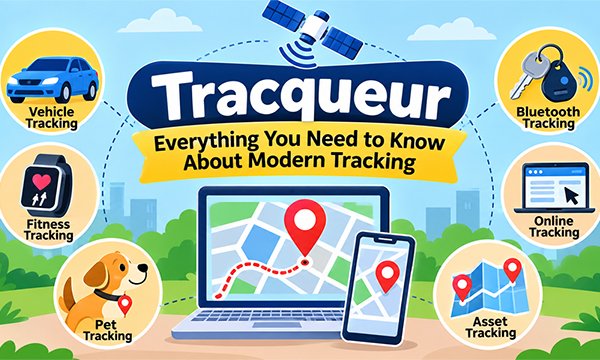
Have you ever lost your keys or bag? Maybe you wanted to know where your car was parked. Modern tracking tools can make these small problems much easier to solve. They can help us find many things in daily life.
In 2026, tracking is used in cars, phones, watches, bags, pets, and work tools. Tracqueur is a term you may see when reading about these tools online. It can be linked with several kinds of tracking technology.
In this guide, we will explain what Tracqueur means and how it works. We will also cover GPS, Bluetooth, fitness tracking, pet tracking, business use, safety, privacy, and other useful facts.
What Is Tracqueur?
Tracqueur is a term used online when people talk about tracking tools. It may describe a small device that tracks location. It may also describe software that records movement or other activity.
The word does not always mean one type of tracker. For example, someone may use it for a GPS unit inside a car. Another person may use it when talking about a Bluetooth tag attached to a bag.
Tracqueur should also not be treated as one confirmed worldwide product or company. Its meaning depends on where the word appears. It is best to check the actual device and its features before deciding what the term means.
How Does Tracqueur Work?
Most tracking tools follow a simple process. First, the device collects information. Next, it saves or sends that information. An app or website can then show the details to the user.
A Tracqueur may use GPS, Bluetooth, Wi-Fi, mobile networks, or small sensors. GPS can help find an outdoor location. Bluetooth is often useful for nearby objects. Sensors can record movement and daily activity.
Not every tracker gives a live location. Some show the last known place instead. Others send new updates every few minutes. This is important when choosing a tracker because each system works in a different way.
Main Types of Tracqueur
There are many types of Tracqueur technology. GPS trackers are often used for cars and work equipment. They can help owners see where an item is or where it was recently located.
Bluetooth trackers are different. These small tags are often placed on keys, wallets, backpacks, and luggage. They work well when you want help finding an item that is easy to lose.
There are also fitness trackers, pet trackers, and business tracking systems. Some tracking is fully digital. Websites and apps may use tracking tools to record visits, clicks, and other online actions.
GPS Tracqueur for Cars and Assets
A GPS Tracqueur uses signals from satellites to work out its location. GPS trackers are commonly used in cars, vans, trucks, bikes, machines, and other valuable equipment.
Imagine you run a small delivery company. You have several vans on the road. A vehicle tracker can help you see their reported locations. Some systems may also record routes, stops, and travel history.
GPS can find a location without mobile internet. However, a live tracker often needs a mobile connection to send fresh information to your phone. Some services may also charge a monthly or yearly fee.
GPS has limits too. It may be less accurate inside buildings, underground, or near tall buildings. Battery life and mobile coverage can also affect how well a tracking device works.
Bluetooth Tracqueur for Everyday Items
A Bluetooth Tracqueur is useful for smaller items. You might attach one to your keys, wallet, suitcase, camera bag, or backpack. These tags are usually small and easy to carry.
When the tag is close to your phone, Bluetooth can connect the two devices. The app may tell you the item is nearby. Some tags can also make a sound. This makes finding keys under a sofa much easier.
Some Bluetooth systems can also use a larger network of nearby compatible devices. If another device detects your lost tag, the system may update its approximate location for you.
Bluetooth tags are not the same as GPS trackers. Many Bluetooth tags do not have their own GPS receiver. Their direct range is also shorter, so it is important to understand the difference before buying one.
Fitness and Pet Tracqueur
Fitness trackers are designed to record daily activity. A fitness Tracqueur may count steps, record workouts, track routes, or measure heart rate. Some devices also give information about sleep and daily movement.
These numbers can help people see patterns. For example, you may notice that you walk more on weekends. However, fitness tracker readings are not always exact. They should not replace medical tests or advice from a health professional.
Pet trackers have a different job. They can help owners find a dog or cat that moves away from home. Some use GPS and mobile networks. Others use Bluetooth for shorter distances.
Some pet trackers also offer safe-zone alerts. You can set an area around your home. The app may alert you when your pet leaves that area. Size, comfort, battery life, water resistance, and network coverage should all be checked before choosing one.
How Businesses Use Tracqueur
Businesses can use Tracqueur technology to keep track of cars, tools, machines, and other equipment. This can save workers from spending time searching for items at different work sites.
A company may also use vehicle tracking to view routes and stops. This information can help managers plan deliveries and understand where company vehicles are during work.
Business tracking must still respect privacy. Workers should know about tracking when required by local rules. Companies should also control who can see tracking records and avoid keeping private information longer than needed.
Benefits and Limits of Tracqueur
A Tracqueur can make daily life easier. It can help you find a lost bag, check a car, or locate a pet. Businesses can also use tracking tools to find equipment and manage work vehicles.
Tracking can save time too. Think about losing your keys before work. A small Bluetooth tag may help you find them faster. A GPS tracker can also give useful location details when a vehicle or valuable item goes missing.
Still, no tracker is perfect. GPS may be less accurate indoors or near tall buildings. Bluetooth has a shorter direct range. A weak mobile signal can also stop some trackers from sending fresh updates.
Battery life matters as well. A tracker with no power cannot send new data. Some devices also need a paid plan. Always check these limits before you depend on a tracking device.
Can Tracqueur Work Without Internet?
Some Tracqueur features can work without internet. A GPS receiver can use satellite signals to find its location. It does not always need mobile internet just to work out where it is.
Bluetooth can also work without internet when two devices are close enough. For example, your phone may connect directly to a Bluetooth tag attached to your keys.
Remote tracking is different. A GPS device may know where it is, but it often needs a mobile or internet connection to send that location to your phone. Live maps and remote alerts may also need internet access.
Some trackers save information when they are offline. They may send the saved data later when a connection returns. This is why offline tracking and live tracking are not the same thing.
Tracqueur Privacy and Safety
Location information can be very private. A Tracqueur may show where a person lives, works, shops, or travels. This means users should protect their tracking accounts carefully.
Use a strong password for your tracking app. Turn on extra login protection when it is offered. You should also check who can see your location and remove access when someone no longer needs it.
Bluetooth tags can also be used in the wrong way. Some modern systems can warn people when an unknown compatible tracker appears to be moving with them. These alerts can help people notice unwanted tracking.
Tracking another person without permission can also cause legal problems. Laws are different from place to place. In 2026, it is still important to check local rules and get permission when tracking involves another person.
How to Choose the Right Tracqueur
Start by asking one simple question. What do you want to track? Your answer can make choosing the right Tracqueur much easier.
A GPS tracker may be useful for a car that travels long distances. A Bluetooth tag may work better for keys, a wallet, or luggage. A fitness watch is better if you want to record steps and workouts.
Next, check battery life, size, location update speed, and network support. Look at the app too. Make sure it works with your phone and is simple enough for you to use.
Do not forget the cost. Some trackers need a monthly plan. Others only need a battery change from time to time. Water resistance and strength may also matter for outdoor use or pet tracking.
Tracqueur vs GPS Tracker
A Tracqueur and a GPS tracker are not always the same thing. GPS is a specific technology. It uses signals from satellites to help a device work out its location.
Tracqueur is used in a wider way online. It may describe GPS units, Bluetooth tags, fitness devices, pet trackers, or other tools used for tracking.
Think about a tag on your keys. It may use Bluetooth but have no GPS receiver. It can still help you find your keys. This is why calling every tracking device a GPS tracker can be confusing.
Before choosing a device, check how it actually works. Do not depend only on its name. Look at its signal type, range, battery, app, and location features.
Is Tracqueur a Real Brand or Product?
There is no clear proof from the information reviewed for this guide that Tracqueur is one single worldwide tracking brand, app, or product. The word appears online in different tracking topics.
This is important because readers may see the name and think it points to one company. In many cases, it is better to understand it as a broad or informal term linked with trackers and tracking technology.
There is also no one confirmed Tracqueur price, developer, launch date, or monthly plan that applies to every use of the word. A website may use the term for its own product or service.
If you find a product using this name, check it carefully. Look for clear company details, product features, contact information, prices, privacy rules, and support details before paying for anything.
Conclusion
Tracqueur is a useful term to know when learning about modern tracking. It can be linked with GPS trackers, Bluetooth tags, fitness devices, pet trackers, vehicle systems, and other tracking tools.
These tools can help find lost items, check vehicles, watch pets, record activity, and manage business equipment. Yet every tracker has limits. Battery life, signal strength, range, and internet access can change how well it works.
Privacy is also important. Use tracking tools for a clear and fair reason. Protect your account and understand what information the device collects. Get permission when another person is involved.
The right Tracqueur depends on what you need. Check the technology instead of choosing only by name. A simple Bluetooth tag may be perfect for keys, while a GPS unit may make more sense for a car.
(FAQs)
Is Tracqueur a real tracking device?
Tracqueur is not one confirmed tracking device. The word is used online for different tracking tools. These may include GPS trackers and Bluetooth tags.
Can Tracqueur track someone anywhere?
No. Tracking depends on the device and signal. GPS and mobile trackers may work over long distances. Bluetooth trackers usually have a shorter direct range.
Can Tracqueur work without internet?
Yes, some features can. GPS can find a location without internet. However, sending live location details to your phone often needs a mobile or internet connection.
Can someone secretly track you with a Bluetooth Tracqueur?
A Bluetooth tag can be misused for unwanted tracking. Some modern phones and tracking systems can warn users when an unknown compatible tracker appears to move with them.
Is Tracqueur the same as a GPS tracker?
No. GPS is only one type of tracking technology. Tracqueur can also refer to Bluetooth tags, pet trackers, fitness devices, and other tracking tools.
Up Next: Transjoaimo: The Real Story Behind the Name and Transport Business
