

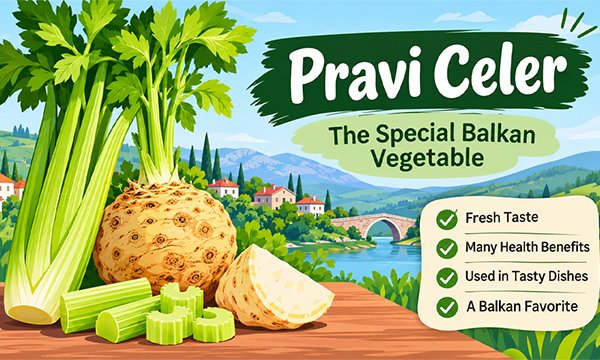
Have you ever heard of Pravi Celer? It is a name used for celery in Croatia and other Balkan food settings. Many people know celery as a green vegetable. However, this plant has more than one form. Some types have long green stalks. Others grow large roots that are used in many meals.
Pravi Celer is also known by its scientific name, Apium graveolens. It is not a completely different vegetable. The name can mean stalk celery, leaf celery, or celeriac. This is why people sometimes get confused when they see it in a recipe.
In this guide, we will explore what Pravi Celer means and why it is used in Balkan cooking. We will also look at its types, taste, food uses, and key differences from regular celery. By the end, you will know how to choose and use it.
What Is Pravi Celer?
Pravi Celer is a Croatian common name for the celery plant. In simple English, it means real celery or true celery. Its scientific name is Apium graveolens. It belongs to the Apiaceae family, which also includes carrots, parsley, and parsnips.
This plant is grown in many parts of the world. People use its stalks, leaves, and large base in different meals. Each part has its own taste and use. Some people enjoy the fresh stalks in salads. Others use the roots in soups and warm dishes.
One important thing to know is that Pravi Celer does not always mean celery root. The meaning can change with the recipe. If a recipe asks you to peel and cut a large round vegetable, it likely means celeriac. If it asks for green stalks, it means regular celery.
Different Types of Pravi Celer
Pravi Celer has a few common forms. They all belong to the same plant species. However, each type grows in a different way and is used for a different purpose. Knowing these types can help you choose the right one.
Stalk celery is the type most people see in grocery stores. It has long green or pale stalks. These stalks are full of water and have a fresh taste. People eat them raw or add them to soups, salads, and snacks.
Leaf celery is grown mainly for its leaves and thin stems. Its taste is often stronger than regular stalk celery. It works well in soups, sauces, and broths. Celeriac is another form. It grows a large and round base with rough brown skin and a pale inside.
Celery seeds are also used in cooking. They are dried and added to some dishes as a spice. They have a strong taste, so a small amount is often enough. Each type adds something useful to the kitchen.
Pravi Celer vs Regular Celery
Many people think Pravi Celer and regular celery are two different vegetables. However, this is not always true. Pravi Celer is a name linked to the wider celery plant. Regular celery is one form of that plant.
The biggest difference is the part people eat. Regular celery is grown for its long green stalks. Celeriac is grown for its large base. The stalks are crisp and juicy, while the root is firm and dense. Both have a celery-like smell and taste.
| Feature | Celeriac | Regular Celery |
|---|---|---|
| Main part | Large base | Green stalks |
| Shape | Round and rough | Long and thin |
| Texture | Firm | Crisp and juicy |
| Taste | Earthy | Fresh and herbal |
| Uses | Soups and mash | Salads and snacks |
| Raw use | Yes | Yes |
Both types are useful in cooking. However, they cannot always replace each other. A recipe that needs a firm root will not get the same result from thin celery stalks.
What Does Pravi Celer Taste Like?
The taste of Pravi Celer depends on the type you use. Regular celery has a fresh and light taste. It can also be slightly bitter. Its crisp texture makes it a good choice for fresh salads and simple snacks.
Leaf celery has a stronger smell and taste. It can change the flavor of a soup with just a small amount. This is why many cooks use the leaves carefully. They add a fresh herbal taste to warm meals and sauces.
Celeriac has a more earthy taste. It still has the familiar smell of celery, but it is less fresh and more like a root vegetable. When cooked, it becomes soft and its taste becomes milder. It can also taste a little sweet after roasting.
Why Pravi Celer Is Popular in Balkan Cooking
Celery has an important place in many Balkan kitchens. It is used in simple home meals as well as old family recipes. People often add it to soups, broths, and stews because it gives food a rich smell and taste.
In countries such as Croatia, Serbia, and Bosnia and Herzegovina, celeriac is often cooked with carrots, onions, parsley root, beans, and meat. These foods work well together and create warm and filling meals. The celery adds an earthy taste without taking over the whole dish.
Stalks and leaves are also useful. Stalks add a fresh taste, while leaves give a stronger smell. Some cooks add them to a pot while the food cooks. Others remove them before serving. This makes Pravi Celer a useful part of many traditional meals.
Simple Ways to Cook and Eat Pravi Celer
Pravi Celer is easy to use in many meals. You can boil it, roast it, steam it, or eat it raw. The best way depends on which type you have. Stalk celery is great for fresh meals, while celeriac works well in warm dishes.
Soups and stews are simple ways to enjoy this vegetable. You can add celery stalks, leaves, or peeled celeriac to a pot with carrots, onions, and other vegetables. They add a nice taste and smell to the food.
You can also roast celeriac with a little oil and salt. Cut it into small pieces and cook until soft. It can also be boiled and mashed with potatoes. For a fresh meal, grate peeled celeriac and mix it with apple, carrot, and lemon juice.
Pravi Celer Nutrition and Health Benefits
Pravi Celer can be a healthy part of your daily meals. It gives your body fiber, vitamins, minerals, and water. However, the amount of each nutrient depends on the type you eat. Stalk celery has more water, while celeriac is more firm and filling.
Celeriac also contains vitamin C, vitamin K, potassium, and fiber. Fiber helps keep your digestion working well. Potassium helps your muscles and nerves work as they should. Vitamin K helps with normal blood clotting and supports bone health.
Here are some simple ways Pravi Celer can support a healthy diet:
-
Supports digestion: Fiber helps your gut work well.
-
Provides vitamins: It gives your body useful nutrients.
-
Supports bones: Vitamin K plays a role in bone health.
-
Helps muscles: Potassium supports normal muscle work.
-
Adds flavor: It makes meals tasty without many calories.
Still, celery is food, not medicine. It cannot cure diseases or remove all toxins from your body. Enjoy it as part of a balanced diet.
How to Choose and Store Pravi Celer
Choosing fresh Pravi Celer is not hard. You just need to check its look, feel, and smell. If you are buying stalk celery, choose firm stalks with fresh green leaves. Avoid bunches that look very dry, yellow, or soft.
If you are buying celeriac, look for a firm and heavy root. Its skin is naturally rough and uneven. This is normal. However, avoid roots with mold, large soft spots, or a bad smell. A fresh root should feel solid when you hold it.
Store celery in the fridge to help it stay fresh. Keep celeriac whole until you need it. After cutting it, cover the pieces and place them in the fridge. You can also freeze celery for later use in soups and stews. Frozen stalks may become soft, so they are not the best choice for fresh salads.
How to Grow Pravi Celer at Home
Do you enjoy growing your own food? You can grow Pravi Celer at home if you have enough space, good soil, and water. It can grow in a garden or a large plant pot. However, celery needs regular care and time to grow well.
Start with good seeds and plant them close to the soil surface. The seeds are very small, so do not cover them with a thick layer of soil. Keep the soil moist while they begin to grow. Once the young plants are strong, you can move them to a garden bed or a larger pot.
Celery needs sunlight and regular water. Do not let the soil become dry for long periods. Celeriac also needs a long growing season because its large base takes time to form. The best planting time depends on your local weather and the type of celery you choose.
Best Pravi Celer Substitutes and Common Mistakes
Sometimes you may not find Pravi Celer at your local shop. The good news is that you can use other vegetables in many recipes. The best choice depends on whether the recipe needs stalks, leaves, or celeriac.
Regular celery is a good choice when you need green stalks. Parsley can help add a fresh herbal taste. If a recipe needs celeriac, try parsnip, parsley root, or turnip. These vegetables have a firm texture, but their taste is not exactly the same.
There are also a few common mistakes to avoid. Some people think Pravi Celer always means celery root. Others use regular celery when a recipe needs a large root. Always check the cooking steps before buying the vegetable. Also, remove the thick skin from celeriac before cooking it. Do not use celery that is moldy, slimy, or smells bad.
Conclusion
Pravi Celer is a useful vegetable with many forms and uses. Its name is linked to the celery plant, which has the scientific name Apium graveolens. It may mean stalk celery, leaf celery, or celeriac, depending on the recipe and local use.
Each type has something special to offer. Stalk celery adds crunch to fresh meals. Leaf celery gives soups and sauces a strong taste. Celeriac works well in roasted dishes, salads, soups, and mashed meals. It also gives your body useful nutrients.
The most important thing is to know which type a recipe needs. Look at the picture and cooking steps before buying it. Once you understand the difference, Pravi Celer becomes much easier to choose, prepare, and enjoy.
Whether you use it in a warm soup or a fresh salad, this vegetable can bring a simple and fresh taste to your meals.
(FAQs)
What is Pravi Celer in English?
Pravi Celer means “true celery” or “real celery.” It is a Croatian name for the celery plant.
Is Pravi Celer the same as celery root?
Not always. It can mean regular celery, leaf celery, or celeriac, also called celery root.
Can you eat Pravi Celer raw?
Yes! You can eat celery stalks and leaves raw. You can also eat peeled celeriac in salads.
What makes Pravi Celer healthy?
It contains fiber, vitamin C, vitamin K, and potassium. These nutrients support digestion, bones, and normal body functions.
Can Pravi Celer cause an allergic reaction?
Yes. Celery can cause serious allergies in some people. Celeriac can also cause a reaction because it comes from the same plant.
