

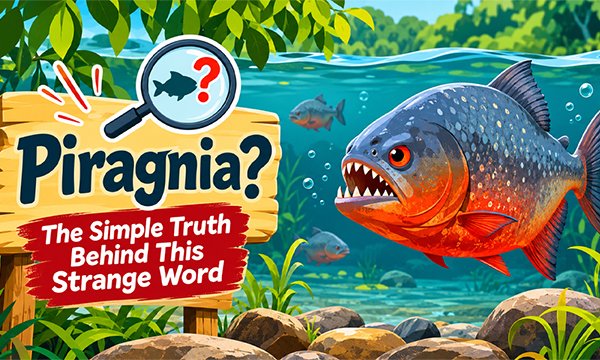
Have you ever seen the word Piragnia online and wondered what it means? At first it may sound like the name of a strange fish. It also looks very close to the word piranha. This can easily cause confusion.
The truth is much simpler. Piragnia is not a known scientific name for a fish species. The word seems to be linked with piranha. It may be an unusual spelling or a simple spelling mistake that has spread online.
In this guide we will explain Piragnia in easy words. We will also explore real piranhas. You will learn about their bodies habitat food and behavior. We will also clear up some popular ideas that can make these fish seem scarier than they really are.
What Is Piragnia?
Piragnia is an unusual word that sometimes appears on websites and online searches. When the word is used to talk about fish it is usually linked to piranhas. However Piragnia is not an accepted scientific fish name.
Think about hearing a new word for the first time. You may know how it sounds but not know how to spell it. Someone hearing “piranha” could write it in another way. Piragnia may have appeared in a similar way.
The exact start of this spelling is not clear. It could also be used as a creative name or username in some places. This is why readers should always check the context before deciding what Piragnia means.
Is Piragnia a Real Fish?
There is no widely recognized fish species called Piragnia. Real animal species have accepted names that help scientists identify them. Piragnia does not have its own accepted scientific fish name or clear scientific group.
Piranhas are very different in this way. They are real freshwater fish that have been studied for many years. They belong to the Serrasalmidae family. This family also includes other related fish.
A good example is the red-bellied piranha. Its scientific name is Pygocentrus nattereri. This name helps people know exactly which fish is being discussed. There is no similar accepted scientific name for a so-called Piragnia fish.
Piragnia vs Piranha: What Is the Difference?
The biggest difference between Piragnia and piranha is simple. Piranha is a recognized common name for real fish. Piragnia appears to be an informal spelling that people sometimes use online.
The two words should not be treated as names for two separate fish. If you see a website talking about a rare Piragnia fish it is wise to check the claim. Look for a scientific name and information from trusted fish sources.
The similar sound may explain much of the confusion. One extra or changed letter can make a familiar word look new. Yet a different spelling does not create a new animal species. This is important when reading unusual animal claims online.
Why Does Piragnia Appear Online?
Words can spread very fast on the internet. One person may spell a word incorrectly in a post. Another website may use that spelling. Soon the same word can appear on several pages and start to look official.
Search engines can also show pages that contain unusual spellings. This means people may search for Piragnia after seeing the word somewhere else. More searches can then lead to more articles about the same strange term.
Still this does not prove Piragnia is a real fish name. In 2026 it is easy for copied information to move from one page to another. Readers should check trusted sources before believing claims about a rare or newly found animal.
What Do Real Piranhas Look Like?
Real piranhas have an interesting look. Many have deep flat bodies with strong jaws. Their sharp teeth are one of their most famous features. The teeth are often triangular and sit close together inside the mouth.
Not every piranha looks the same. Their color size and body features can change between species. Age and living conditions can also affect how a fish looks. Some are silver or gray while others have darker colors.
The red-bellied piranha is a famous example. It often has a silver or gray body with red or orange color below. Its sharp teeth help it grip and cut food. They may look scary but they are simply tools the fish uses to eat.
Where Do Piragnia and Piranha Claims Lead?
Since Piragnia is not a recognized species it does not have its own known natural home. Claims about a Piragnia habitat usually lead back to information about real piranhas and their South American freshwater homes.
Piranhas live in rivers lakes streams and flooded areas. The Amazon Basin is one of their best-known homes. Different piranha species are also found in other South American river systems such as the Orinoco and Paraguay-Paraná systems.
Their homes can change with the seasons. Heavy rain can raise river levels and flood nearby forests. These new water areas can give fish more places to find food and shelter. This changing world is an important part of piranha life.
What Do Piranhas Eat?
Many people think piranhas eat only meat. That idea is not correct. Their food can include small fish insects and other small water animals. Some species may also eat animal matter they find in the water.
Surprisingly some piranhas also eat fruit seeds and plant material. Fruit may fall from trees into rivers or flooded forests. When this happens certain piranhas can use it as food. Their diet depends greatly on the species and what is available.
Their strong jaws and sharp teeth help them cut food into smaller pieces. Yet sharp teeth do not mean they attack everything around them. Food habits can change with the season water level habitat and species.
This gives us a much clearer picture of Piragnia and its connection with real piranhas. In the second half we can explore whether piranhas are dangerous the biggest myths about them their role in nature aquarium care and how to check Piragnia claims online.
Are Piragnia or Piranhas Dangerous?
Since Piragnia is not a known fish species, there is no separate danger linked to it. When people ask if Piragnia is dangerous, they are most likely asking about real piranhas. These fish do have strong jaws and sharp teeth.
A piranha can bite a person. A bite may hurt and cause an injury. Still, piranhas do not normally see humans as food. Their behavior can change because of breeding, low water, food, or a threat nearby.
Movies often show hundreds of piranhas attacking people in seconds. This makes the fish seem much more dangerous than they usually are. People should still respect them. If you visit a river where piranhas live, follow local safety advice before entering the water.
Piragnia Myths and Surprising Piranha Facts
One popular myth says piranhas attack anything that enters the water. This is not true. Some piranhas can be careful around larger animals. They may swim away when they feel that danger is close.
Another myth says a group of piranhas always means an attack is coming. Some species do swim in groups. However, staying together can also help protect them from larger animals. A group is not always looking for its next meal.
Here is another surprise. Piranhas can become food themselves. Larger fish, birds, and other animals may eat them. So, while their teeth look scary, piranhas are not always the strongest animals in their home.
Piragnia and the Role of Piranhas in Nature
There is no known natural role for Piragnia because it is not a recognized species. Real piranhas, however, are part of South America’s rich freshwater world. They share rivers with many fish, plants, insects, birds, and other animals.
Piranhas can eat fish, insects, fruit, and other food. Some may also feed on dead animal matter. At the same time, larger animals can eat piranhas. This makes them part of a much bigger food chain.
Healthy rivers are important for these fish. Dirty water, forest loss, and major changes to rivers can hurt freshwater homes. Protecting rivers and nearby forests helps piranhas, but it also helps many other animals that depend on the same water.
Can You Keep Piranhas as Pets?
Some piranha species are kept in home aquariums. However, they are not simple pets. They need the right tank, clean water, good food, and strong water filters. Owners also need to understand how their chosen species behaves.
Their sharp teeth are another reason to be careful. Cleaning a tank or moving things inside it should be done with care. Someone who has never kept fish before may find piranhas harder to manage than common aquarium fish.
Laws are also important. Some places allow people to own piranhas, while others have limits or bans. Rules can change. In 2026, anyone thinking about buying one should check current local laws before bringing the fish home.
A pet piranha should never be put into a local river or lake. A fish from another area could harm native animals or spread disease. If an owner cannot care for the fish, an aquarium expert or local wildlife office may be able to help.
How to Check Piragnia Information Online
Imagine finding a website that says Piragnia is a newly found fish with huge teeth. It may sound exciting. But before sharing the story, stop and check where the information came from.
Start by looking for a scientific name. Real species usually have accepted scientific names that help experts identify them. You can also check trusted fish databases, museums, universities, research groups, and wildlife sources.
Be careful when many websites repeat the same claim. Ten pages can copy one wrong fact. Seeing the same statement many times does not always make it true. Look for where the claim first came from and whether experts support it.
It is also helpful to search for piranha instead of Piragnia when you want fish facts. You can even search for a known species, such as Pygocentrus nattereri. This can lead to clearer and more useful information.
Conclusion
So, what is Piragnia? Based on known fish names, it is best understood as an unusual spelling linked to piranha. There is no widely recognized fish species with Piragnia as its accepted name.
The real story of piranhas is much more interesting than many online myths. They are freshwater fish from South America. They have strong jaws and sharp teeth. Yet they also have varied diets, different behaviors, and an important place in nature.
Piranhas are not the nonstop human hunters shown in many movies. They can bite and should be respected, but humans are not their normal food. Some species even eat fruit and plant material. They can also become prey for larger animals.
The word Piragnia is a good example of why we should check strange claims online. A spelling mistake can spread from one page to another very quickly. Before believing that an unusual word is the name of a new animal, look for trusted facts and a real scientific name.
In the end, Piragnia may be the word that starts the search, but piranha is the real fish worth learning about. Knowing the difference makes the topic much easier to understand and helps separate useful facts from online confusion.
(FAQs)
Is Piragnia a real fish?
No. Piragnia is not a known fish species. It seems to be an unusual spelling of piranha.
Is Piragnia the same as piranha?
Piragnia is often linked with piranha online. Piranha is the correct and widely known name for the real freshwater fish.
Do piranhas really eat humans?
No. Piranhas do not normally hunt humans for food. They can bite, but movies make their danger look much worse than it usually is.
Do piranhas eat only meat?
Surprisingly, no. Some piranhas also eat fruit, seeds, and plant matter. Their food depends on their species and what they can find.
Can you keep a piranha as a pet?
Yes, in some places. However, piranhas need special care and a proper tank. Some areas also limit or ban them, so local laws should be checked first.
