

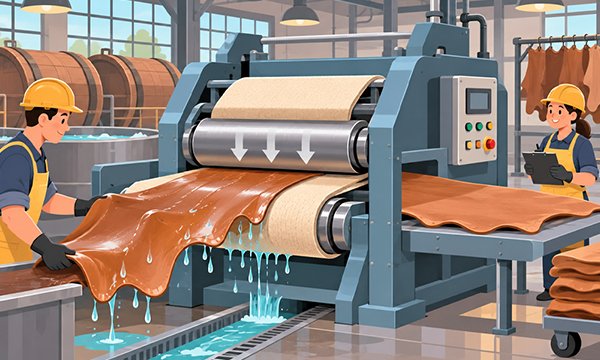
Have you ever wondered how wet animal hides turn into soft leather? Making leather takes many steps. One important step is called sammying. It helps remove extra water from leather so workers can handle it more easily.
Freshly tanned leather holds a lot of water. This makes it heavy and hard to work with. Sammying uses special machines to squeeze out extra water. The leather stays soft and wet enough for the next step.
In this article, we will explain what sammying means and how it works. We will also look at the machines used in this process. You will learn why this step matters and how it helps leather makers.
What Is Sammying in Leather Making?
Sammying is a process used to remove extra water from wet leather. It uses pressure instead of heat. A special machine presses the leather between rollers. This pushes out water while keeping the leather soft and flexible.
The process often takes place after tanning. Tanning helps turn animal hides into leather. At this stage, the material still holds plenty of water. Sammying removes some of that water so workers can move to the next step.
Think about squeezing water from a wet towel. Sammying works in a similar way. The main difference is that leather needs careful pressure. Too much force can leave marks or damage its surface.
Why Is Sammying Important for Leather?
Wet leather can be heavy and difficult to move. Workers may find it hard to spread or cut. Sammying helps solve this problem by removing extra water. This makes the leather easier to lift and handle.
The process also helps prepare leather for other jobs. Some machines cut leather into layers. Others make its thickness more even. These steps work better when the leather has the right amount of moisture.
Good sammying can also help leather makers get steady results. When each hide is treated with care, later work becomes easier to manage. This can help reduce waste and avoid problems during production.
How Does the Sammying Process Work?
The sammying process starts with wet leather. Workers check each hide before placing it into the machine. They spread it out and remove folds. This helps the leather pass through the rollers without getting damaged.
Next, the machine pulls the leather between strong rollers. These rollers press the material and squeeze out extra water. Special felt belts help hold the leather. They also allow the removed water to drain away.
Finally, the leather comes out of the machine with less water inside. Workers check its surface and moisture level. The leather must stay flexible because it still needs more work before becoming a finished product.
What Is a Sammying Machine?
A sammying machine is a special tool used in leather factories. Its main job is to remove water from wet leather. It uses rollers and controlled pressure to complete this task without fully drying the material.
The rollers do most of the work. Felt belts help support the leather and move water away. Many machines also use a hydraulic system. This system helps control how much pressure the rollers place on the leather.
Modern machines may have speed controls and moving belts. These parts help workers process leather more smoothly. In 2026, choosing a machine still depends on the type of leather and the amount of work needed.
Different Types of Sammying Machines
Not every leather factory uses the same machine. Some factories handle large cow hides. Others work with smaller sheep or goat skins. Different machine types help leather makers meet these needs and manage daily production.
Through-feed machines move leather through rollers in a steady flow. They are useful when factories process many hides. Combined machines can remove water and spread the leather at the same time. This helps reduce extra handling.
Smaller machines are often used for narrow leather pieces or small skins. Their size must match the work being done. A good machine should handle the leather safely while removing water evenly from its surface.
Main Benefits of Sammying in Leather Processing
One major benefit of sammying is easier leather handling. Wet hides can be very heavy. Removing extra water makes them easier to carry and move. Workers can also place them into other machines with less trouble.
Another benefit is better preparation for cutting and shaving. Shaving helps make leather more even in thickness. When the leather holds too much water, this work may become harder. Sammying helps prepare it for these jobs.
Sammying may also reduce the amount of water that later drying must remove. This can help save time in some factories. However, the results depend on the machines used and how the full leather process works.
What Affects the Sammying Process?
Many things can change how well sammying works. Leather thickness is one important factor. Thick cow hides need different pressure than thin sheep skins. Workers must choose the right settings to remove water without hurting the leather.
Roller pressure also plays a big role. Too little pressure may leave extra water inside. Too much pressure can cause marks or damage. The machine must apply enough force to remove water while keeping the leather in good shape.
Feeding speed and felt condition matter too. A dirty or worn felt may cause uneven results. The amount of water already in the leather also makes a difference. Regular checks help workers keep the process smooth and safe.
Sammying vs. Drying and Other Leather Processes
Sammying and drying may sound similar, but they are different. Sammying uses pressure to squeeze water from leather. Drying removes more moisture, often through heat or moving air. Both steps help prepare leather for further work.
Setting out is another step in leather making. It helps spread and flatten wet leather. This can remove folds and make the surface smoother. Some machines perform sammying and setting out together to save extra handling time.
Shaving has a different purpose. It removes material from the back of the leather to make its thickness more even. Each process has its own job. They work together to help create leather that meets the needed size and quality.
Common Sammying Problems and Easy Solutions
Sometimes, leather comes out of the machine with too much water. This may happen when pressure is too low or the felt is worn. Workers should check the machine settings before putting the leather through again.
Another common problem is uneven water removal. One part of the hide may stay wetter than another. This can happen because of folds or poor feeding. Spreading the leather properly and checking the rollers can help prevent it.
Roller marks and wrinkles can also appear during sammying. Too much pressure or dirty machine parts may cause these problems. Workers should clean the machine and use settings that match the leather type. Regular care helps reduce damage.
Up Next: Who Is Wanda Hutchins? Her Life Before and After Michael Strahan
How to Check Sammying Quality and Results
Checking the results is an important part of leather making. One simple method is weighing the leather before and after sammying. If a hide weighs 25 kg before and 22 kg after, it has lost 3 kg.
This means the hide has lost 12% of its starting weight. However, this does not mean the leather has only 12% water left. Weight loss only shows how much material was removed during the process.
Workers can also test moisture with proper tools. They should check different parts of each hide, not just the middle. Keeping records of weight and machine settings helps factories find problems and improve results over time.
Sammying Machine Safety and Maintenance
Sammying machines need regular care to work well. Workers should inspect rollers and felt belts for dirt or damage. They should also keep water drains clear. These simple checks help prevent poor results and unexpected machine problems.
Safety is even more important. Strong rollers can trap hands and cause serious injuries. Workers must keep guards in place and never reach into moving parts. Machines should be fully stopped and safely locked before cleaning or repairs.
The water removed from leather also needs proper care. It may contain chemicals from tanning. Factories must collect this water and send it for safe treatment. Good waste handling helps protect nearby water sources and the environment.
How to Choose the Best Sammying Machine
Choosing the right machine starts with knowing your leather type. Large cow hides need enough working space. Smaller skins may need a narrower machine. The machine must also handle the amount of leather a factory makes each day.
Pressure and speed controls are important features. They help workers change settings for different hides. A machine with easy controls can make daily work simpler. It should also have strong safety guards and clear instructions for workers.
Price matters, but it is not the only cost. Factories must also pay for power, repairs and new felts. In 2026, buyers should compare running costs and spare parts before choosing a machine for long-term use.
Conclusion
Sammying is an important step in leather making. It removes extra water without fully drying the leather. This makes wet hides easier to handle and prepares them for cutting, shaving and other steps in the production process.
Good results depend on the right machine settings and careful handling. Workers must check pressure, feeding speed and felt condition. These small details can make a big difference in how well the leather moves through production.
The main goal is simple. Remove enough water while keeping the leather safe and flexible. With proper machine care and trained workers, sammying can help factories produce leather more smoothly and avoid common problems.
(FAQs)
Can Sammying Damage Leather?
Yes! Too much pressure can leave marks or wrinkles on leather. Wrong machine settings may also damage its surface. That is why workers must control pressure carefully.
Does Sammying Remove All Water From Leather?
No! Sammying only removes extra water. The leather stays wet and flexible after the process. It still needs drying and other steps before becoming a finished product.
Can Leather Be Made Without Sammying?
Yes! Some leather production methods may skip this step. However, sammying helps remove extra water and makes wet hides easier to handle during later work.
Why Do Some Hides Stay Wet After Sammying?
Low roller pressure, worn felts or poor feeding can cause this problem. Uneven leather thickness can also affect water removal. Regular machine checks help improve results.
Can Sammying Save Money in Leather Factories?
Yes! Proper sammying can make handling easier and reduce the water left for drying. This may save time and energy. However, actual savings depend on the factory’s machines and production methods.
Up Next: What Is Streameast GD? History Safety and Current Status
