

Have you ever made a dress or bag and found that the seams came apart? This can happen when you use the wrong seam. Good sewing is not just about joining fabric. It is also about making clothes strong and neat.
This is where Nahttypen comes in. It is a German word that means seam types. Each seam has its own job. Some hold heavy fabric together. Others make thin fabric look neat and clean.
In this guide for 2026, we will explore different seam types and their uses. You will learn why seams matter and how to pick the right one. These simple tips can help you make better clothes at home.
What Is Nahttypen in Sewing?
Nahttypen means different types of seams used in sewing. A seam joins two or more pieces of fabric together. You can find seams in shirts and pants. They are also used in bags and many other things made from fabric.
A seam and a stitch are not the same thing. A stitch is one small loop of thread made by a needle. A seam is the joined part of the fabric. It may have one or more lines of stitches.
Learning about Nahttypen can make sewing much easier. You will know which seam works best for your project. This can save time and help you avoid mistakes. Even small changes in your sewing can make a big difference.
Why Are Nahttypen Important?
Good seams help clothes stay strong. Think about your favorite jeans. You wear them often and wash them many times. Their seams must hold the fabric together. A weak seam may break when you move or bend.
Nahttypen also help clothes look clean. Some seams hide rough fabric edges. Others make neat lines that add style. When you choose the right seam, your clothes can look just as good on the inside as they do outside.
The wrong seam can cause problems. Thin fabric may look bulky. Stretch fabric may pull at the stitches. Heavy fabric may need more support. Knowing which seam to use helps you avoid these issues and enjoy better sewing results.
Different Types of Nahttypen
There are many types of seams in sewing. Each one has a special use. Some are easy for beginners. Others take more time and care. Learning the main types will help you choose the right one for your work.
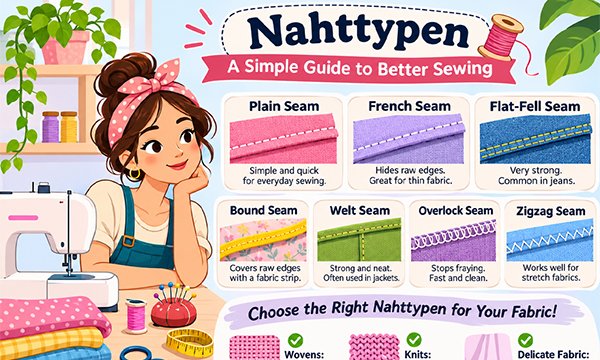
The plain seam is one of the easiest types. It joins two pieces of fabric with a line of stitches. A French seam hides rough edges inside the fabric. It works well for thin cloth like silk.
The flat-fell seam is strong and often used in jeans. Bound seams cover raw edges with extra fabric. Welt seams add strength and a neat line. Overlock seams help stop fraying. Zigzag seams work well when fabric needs to stretch.
How to Choose the Right Nahttypen
Choosing the right seam starts with your fabric. Some fabrics are thick and strong. Others are thin and soft. Each type needs a seam that fits its weight and use. This helps your sewing look better and last longer.
For cotton and linen, a plain seam is often a good choice. Denim may need a flat-fell seam for extra strength. Silk and chiffon often work well with French seams. These seams hide rough edges and give a clean finish.
Stretch fabric needs special care. A straight stitch may break when the fabric pulls. A zigzag or stretch stitch can move with the fabric. Before you start, test your seam on a small piece of cloth. This simple step can prevent mistakes.
Plain Nahttypen for Everyday Sewing
A plain seam is one of the first seams most people learn. It is simple and quick to make. You can use it for shirts and skirts. It also works well for cotton bags and many easy sewing projects.
To make this seam, place two pieces of fabric with their right sides facing each other. Sew a straight line near the edge. Leave enough space for the seam allowance. Then open the fabric and press the seam flat.
Plain seams are easy to sew and work well for beginners. However, some fabrics can fray along the cut edges. You may need to finish these edges with a zigzag stitch. This helps keep your work neat after washing.
French Nahttypen for Clean Seams
French seams are a great choice for thin and soft fabric. They hide raw edges inside the seam. This gives your sewing a smooth finish. They are often used for light blouses and other clothes made from delicate fabric.
To make a French seam, place the wrong sides of the fabric together. Sew a narrow line near the edge. Trim the extra fabric. Fold the pieces so the right sides face each other. Sew again to hide the first seam.
This method takes a little more time than a plain seam. It works best on straight or gently curved edges. Sharp curves can be harder to sew. With a little practice, French seams can give your clothes a neat and lovely finish.
Flat-Fell Nahttypen for Strong Clothing
Flat-fell seams are known for their strength. You can find them in jeans and work clothes. They hold fabric together and hide rough edges. This makes them a good choice for clothes that face pulling and daily use.
To make this seam, place two fabric pieces together and sew a straight line. Trim one edge shorter than the other. Fold the longer edge over the shorter one. Then sew it down to make a flat finish.
These seams take more time than plain seams. But they can make clothing last longer. They also give clothes a clean look on both sides. If you love making jeans or strong bags, this seam is worth learning.
Overlock and Zigzag Nahttypen
Overlock and zigzag seams are useful for many sewing projects. They help keep fabric edges neat and safe from fraying. They are also helpful when working with soft or stretchy cloth. Both methods have their own benefits.
An overlock seam is often made with a serger machine. This machine can sew and trim fabric edges at the same time. A zigzag stitch moves from side to side. This lets the thread stretch with the fabric.
You do not need a serger to make good clothes. A normal sewing machine with a zigzag stitch can also work well. For shirts and stretch pants, these stitches are useful. Always test them before sewing your final project.
Up Next: What Happened to Melva Porter? Tyler Perry’s Sister Today
How to Sew Nahttypen Step by Step
Good sewing starts before you touch the machine. First, choose the fabric for your project. Wash it first if needed. Then cut the pieces with care. Make sure the edges are even and the fabric lies flat.
Next, choose the right needle and thread. A thin needle works well for light fabric. Thick cloth may need a stronger needle. Follow the seam allowance shown on your pattern. This is the space between the stitches and fabric edge.
Now you can start sewing. Keep your hands relaxed and guide the fabric slowly. Do not pull it through the machine. After sewing, press the seam with an iron at a safe heat. This helps your Nahttypen look neat and flat.
Common Nahttypen Mistakes to Avoid
Even people who sew often can make mistakes. One common problem is a seam that breaks after a few uses. This may happen when the wrong stitch is used. Weak thread or poor sewing can also cause trouble.
Another problem is fabric puckering. This happens when small folds form near the stitches. Wrong thread tension or needle size may be the cause. Test your machine on spare fabric. Change one setting at a time until the stitches look smooth.
Fabric can also slip while you sew. This is common with silk and other smooth cloth. A walking foot may help keep both layers moving together. Take your time and use clips or pins. Small steps can prevent big sewing mistakes.
Best Tools for Sewing Nahttypen
You do not need a room full of tools to start sewing. A basic sewing machine can handle many seam types. Sharp scissors help you cut neat edges. A seam ripper lets you remove stitches when something goes wrong.
A serger is helpful for making overlock seams. But it is not a must for beginners. A walking foot can help with thick or slippery cloth. Good needles and thread also matter. They help your machine make smooth and even stitches.
Do not forget your iron. Pressing each seam can make a big change in how your clothes look. It helps remove folds and keeps the fabric flat. These simple tools make learning Nahttypen easier and help you enjoy your sewing projects.
Up Next: Who Is Ann Serrano? Her Life After George Lopez
Easy Nahttypen Tips for Beginners
Learning to sew takes time and practice. Start with a plain seam before trying harder methods. Use old cotton fabric for your first tests. This lets you learn without worrying about wasting good cloth or making costly mistakes.
Try making a small bag or pillow cover. These projects are simple and teach useful skills. Once you feel ready, try a French seam or flat-fell seam. Compare how each one looks and feels. You will soon see the difference.
Keep a few fabric scraps with different seams as samples. Write the seam name on each one. This makes it easy to remember what you learned. With regular practice, you can choose the right Nahttypen and make better clothes with less effort.
Conclusion
Nahttypen may sound like a hard word at first. But it simply means different seam types used in sewing. Each seam has its own job. Some add strength while others help clothes look neat and clean.
The best seam depends on your fabric and project. Plain seams work well for many simple items. French seams suit light fabrics. Flat-fell seams are useful for strong clothes. Zigzag and overlock seams help with stretch fabrics and rough edges.
You do not need to learn every seam in one day. Start small and practice often. Test new stitches on spare fabric before using them on clothes. With time, these simple skills will help you make strong and beautiful sewing projects in 2026.
(FAQs)
Can the Wrong Nahttypen Make Your Clothes Fall Apart?
Yes. The wrong seam can break when fabric is pulled or washed. Choosing the right Nahttypen helps keep clothes strong and prevents seams from coming apart too soon.
Which Nahttypen Is the Strongest for Sewing?
Flat-fell seams are among the strongest seam types. They are often used in jeans and work clothes because they hold fabric firmly and protect raw edges from damage.
Can You Make Strong Seams Without an Expensive Sewing Machine?
Yes. A basic sewing machine can make strong seams with the right needle and thread. Good stitching and proper seam finishing matter more than having an expensive machine.
Why Do Some Seams Break Even When the Fabric Looks Perfect?
Seams can break because of weak thread or wrong stitch settings. Stretch fabric may also snap straight stitches. Using a suitable stitch helps prevent this problem.
What Is the Biggest Secret to Making Nahttypen Look Professional?
Pressing seams with an iron is one of the simplest tricks. It helps stitches lie flat and makes clothes look neat. Even beginners can get better results with this habit.
Up Next: Mindset Energy: What It Is and How to Improve It Every Day
