

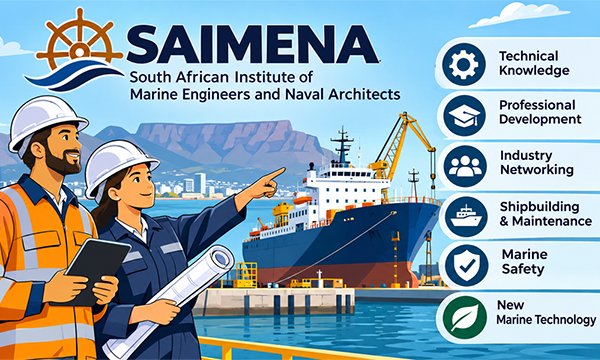
Ships may look simple from the shore. But inside each ship are many machines and systems. Skilled people must design them and keep them safe. This is where marine engineers and naval architects play an important role.
Saimena brings many of these skilled people together in South Africa. Its official name is the South African Institute of Marine Engineers and Naval Architects. It supports learning and helps people share useful knowledge about ships and marine work.
In this guide, we will explore Saimena in simple words. We will look at its history and purpose. We will also explain marine engineering, naval architecture, membership, benefits, industry support, and its place in South Africa today.
What Is Saimena?
Saimena, officially written as SAIMENA, is a professional group in South Africa. It supports people who work in marine engineering and naval architecture. It also has links with shipbuilding, ship repair, ocean engineering, and other marine fields.
SAIMENA is not a normal business that sells products. It is a professional institute. Its goal is to bring skilled people together. Members can share ideas, discuss technical problems, and learn about changes taking place in their industry.
The institute has long had activity in Cape Town and Durban. These cities have strong links with ports and shipping. Its members can include marine engineers, naval architects, students, teachers, consultants, and other people connected with marine technology.
Saimena History and Beginning
The story of Saimena goes back more than 50 years. Before it existed, many South African marine experts were linked with professional groups based in Britain. Over time, there was a growing need for a local institute.
SAIMENA was formally formed on November 29, 1974. This happened after a nationwide vote among people working in related fields. Its first council began its work in 1975. This is why both 1974 and 1975 can appear in its history.
The difference is simple. The institute was formally created in 1974. Its working history is often counted from 1975. In 2025, SAIMENA marked about five decades of work in South Africa’s marine engineering community.
Why Was Saimena Created?
Marine work needs special skills. A ship may have engines, pumps, fuel systems, power systems, and many other parts. It also needs a safe shape and strong body. Experts must work together to make all these parts work well.
Saimena was created to give these professionals a local place to connect. Marine engineers and naval architects could share their knowledge. They could also discuss common problems and support better professional standards in South Africa.
This idea still matters in 2026. Marine technology keeps changing. New systems can make ships cleaner and smarter. A professional institute gives people a place to learn about these changes and hear lessons from others working in the field.
What Does Saimena Do?
One important part of Saimena is sharing technical knowledge. The institute can hold meetings and presentations where experts discuss marine topics. These talks may cover ships, engines, repairs, safety, new technology, and other important subjects.
The institute has also supported professional learning and education. Its Two Oceans Journal has shared technical articles, institute news, and views from people in the industry. This gives members another way to learn from other professionals.
These activities can be useful because books cannot teach every lesson. Imagine an engineer who has solved a difficult engine problem at sea. Sharing that experience may help another engineer understand the same problem much faster.
Marine Engineering and Naval Architecture
Marine engineering mainly deals with the machines and systems that help a ship work. A marine engineer may work with engines, pumps, electrical power, cooling systems, fuel equipment, and control systems.
Naval architecture is different. It focuses more on the ship itself. Naval architects think about the vessel’s shape, size, strength, balance, and movement through water. They help make sure a vessel can perform its job safely.
The two fields are closely connected. A large new engine can change the weight and layout of a ship. That may affect its balance and design. Marine engineers and naval architects must therefore work together on many projects.
How Saimena Helps the Maritime Industry
Saimena helps connect people who work across the maritime field. Shipbuilding is a good example. Building a vessel may involve designers, engineers, equipment makers, shipyard teams, and many other skilled workers.
Ship repair is also important. Ships face salt water, strong weather, heavy loads, and long working hours. Parts can wear out or become damaged. Engineers need good knowledge to find problems and make safe repairs.
Saimena gives professionals ways to discuss these real problems. Technical meetings can cover safety, maintenance, emergency work, and new systems. In April 2026, for example, a Cape Town meeting focused on marine emergency response and salvage work.
Who Can Join Saimena?
Saimena is not only for people who have spent many years working on ships. The institute has different membership levels for people at different stages of their education and careers.
These include Student, Associate, Member, and Fellow grades. There are also honorary forms of recognition. Eligible companies and groups connected with the maritime industry may be able to take part through the Marine Partner category.
Students and cadets are especially important for the future of the field. Joining a professional group can help them see how the industry works outside the classroom. However, each membership grade has its own rules and requirements.
Membership also does not replace the qualifications or official certificates needed for certain jobs. Instead, it can add another layer of learning and professional contact. This makes a good stopping point before looking closely at the benefits of Saimena membership and its connection with ECSA.
Saimena Membership Benefits
Joining Saimena can give members a chance to meet people from the marine field. These may include engineers, naval architects, students, teachers, and other experts. Such connections can help members learn how different parts of the industry work.
Learning is another useful benefit. Technical talks and industry events can introduce members to new ideas. They may learn about ship systems, repairs, safety, design, and new marine technology. This knowledge can support their growth over time.
Still, membership does not promise a job or higher pay. Its value often depends on how much a person takes part. Someone who attends events, asks questions, and meets other members may gain more from the experience.
Up Next: The Full Story of Brandon Edmonds: Babyface’s Talented Son
Saimena and ECSA Recognition
The Engineering Council of South Africa, known as ECSA, has an important role in the engineering field. It handles professional engineering registration in South Africa. Saimena has a different role because it is a professional voluntary association.
SAIMENA is listed by ECSA as a recognized Category A voluntary association. This gives the institute a clear place within the wider engineering community. It also helps connect marine professionals with professional learning and development.
However, joining Saimena does not make someone a registered professional engineer. ECSA registration has its own rules. People should understand this difference before joining. Membership can support professional growth, but it does not replace official registration.
Saimena for Students and Young Engineers
Students can learn many things in a classroom. Yet marine work also needs real experience. Seeing an engine room or shipyard can teach lessons that may be difficult to understand from a book alone.
Saimena can help young people meet experienced professionals. They may hear real stories about ship repairs, vessel design, safety problems, and work at sea. These talks can give students a clearer picture of possible careers.
Practical training can still be a challenge. SAIMENA publications in 2025 discussed problems faced by some students seeking sea training and workplace experience. Professional contacts can help, but they cannot replace required training or official sea service.
Up Next: Neatie: Everything You Need to Know Before Buying
How to Join Saimena
The first step is choosing the right membership grade. A student will have different needs from an engineer with many years of experience. Applicants should read the latest membership rules before sending an application.
Some grades may require details about education, work history, or professional experience. Supporting information may also be needed. The institute reviews applications under its own membership rules, so having an engineering degree does not always mean automatic entry.
Fees and application rules can change. For that reason, people should check Saimena’s current information before applying. This is better than using an old fee list or an application guide that may no longer be correct.
Saimena Activities and Recent Developments
Saimena has continued its work during 2025 and 2026. Its activities have covered topics such as electric ships, vessel engineering, marine emergency work, and research linked with the South African research vessel SA Agulhas II.
Education has also remained part of its work. In 2026, the institute reported support for marine engineering student merit awards at Nelson Mandela University. Such support can help bring attention to students who are building skills for the future.
SAIMENA also announced in April 2026 that its application to join the National Science and Technology Forum had been approved. This shows how its work can connect marine engineering with wider science and technology discussions.
Future of Saimena
Ships are changing. Electric systems, cleaner fuels, digital tools, and smart controls are becoming more important. Marine engineers must understand both traditional machines and newer electronic systems.
Naval architects also face new questions. They must think about fuel use, vessel safety, weight, shape, and environmental needs. Saimena can provide a useful place where professionals discuss these changes and share what they learn.
There is another challenge. The institute has noted an older membership profile among many recorded members. Bringing more young engineers into Saimena may help protect valuable knowledge while adding fresh ideas about software and new technology.
Is Saimena Membership Worth It?
The answer depends on what a person wants. A working marine engineer may enjoy technical talks and meeting other experts. A naval architect may value discussions about ship design, safety, and modern vessel systems.
Students may find different benefits. Meeting experienced professionals can help them understand what employers expect. They can also learn about career paths that may not be clear while they are still studying.
Membership should not be seen as a shortcut to success. It cannot promise a job, promotion, or professional license. It works best as a place for learning, meeting people, and staying connected with the marine engineering field.
Conclusion
Saimena has supported South Africa’s marine engineering community for around five decades. It brings together marine engineers, naval architects, students, educators, and other people who have an interest in ships and marine technology.
Its work includes technical learning, professional contact, education, and industry discussion. Its connection with ECSA also places it within South Africa’s wider professional engineering world, while the two organizations continue to have different roles.
As maritime technology changes, Saimena has a chance to connect old knowledge with new ideas. For students and experienced engineers alike, its real value can come from learning, sharing experience, and taking an active part in the maritime community.
(FAQs)
What does Saimena stand for?
Saimena stands for the South African Institute of Marine Engineers and Naval Architects. It supports marine engineers, naval architects, students, and other maritime experts in South Africa.
Is Saimena more than 50 years old?
Yes. SAIMENA was formally created on November 29, 1974. Its working history is often counted from 1975. This means the institute has served the maritime field for about five decades.
Can students join Saimena?
Yes. Eligible students and cadets can apply for student membership. This can help them meet experienced experts, learn about real marine work, and better understand possible career paths.
Does joining Saimena make you a professional engineer?
No. This is an important fact. SAIMENA membership does not automatically make someone a registered professional engineer. Professional engineering registration in South Africa is handled separately by ECSA.
What surprising challenge does Saimena face?
SAIMENA has reported an older membership profile among many recorded members. This makes attracting young engineers important. New members can help carry decades of marine knowledge into a future shaped by cleaner ships and digital technology.
