

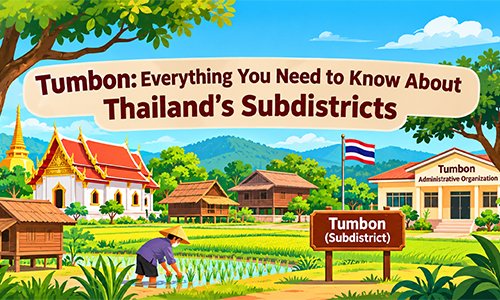
Thailand is known for its busy cities and beautiful beaches. But there is another side of the country that many people do not know about. It is found in small towns and villages where people live close to their families and follow old traditions. These local areas are an important part of Thai life.
One word you may see when learning about Thailand is Tumbon. It is another spelling of Tambon. In Thailand, it means a subdistrict. It is an area that usually includes several villages and helps connect local people with the government.
But what makes a Tumbon so important? How does it work? In this guide, we will explore its meaning and history. We will also look at local leaders and daily life. You will learn how these areas support people and help keep Thai culture alive.
What Is Tumbon?
Tumbon is a word used for a subdistrict in Thailand. It is a local area that usually contains several villages. These villages may have their own homes and local groups. They are part of one larger area called a Tambon.
Think of it this way. A village is a small place where people live. A Tambon brings several villages together under one local area. This makes it easier to plan roads and other services. It also helps local leaders understand what people need.
The word Tumbon is also seen in some online articles about outdoor chairs. However, its main meaning in Thailand is a subdistrict. If you see this word in a Thai address or on a map, it most likely refers to a local area.
Tumbon vs. Tambon: What Is the Difference?
You may have seen both Tumbon and Tambon while reading about Thailand. So, are they two different things? No. When used for Thai subdistricts, both words usually have the same meaning.
However, Tambon is the preferred spelling in English. It follows Thailand’s official system for writing Thai words with English letters. This system is called the Royal Thai General System of Transcription, or RTGS.
Tumbon is an alternative spelling that may appear on websites and in older writing. It does not mean another type of area. If you are writing about Thai places or reading official records, Tambon is the better word to use.
How Does the Tambon System Work in Thailand?
Thailand has different levels of local areas. Each level helps organize people and services. A province is called a Changwat. A province has smaller areas called districts. The Thai word for a district is Amphoe.
Each district usually contains several Tambons. These Tambons then include smaller areas called villages. In Thai, a village is known as a Muban. This system helps people understand where one area ends and another begins.
Here is a simple example. Imagine a province with many districts. One district has several Tambons, and each Tambon has a group of villages. This is how the local area system works. It also helps people find places when reading maps and addresses.
How Many Tambons Are There in Thailand?
Thailand has thousands of Tambons spread across its provinces. The information collected for this guide reports about 7,255 Tambons in the 76 provinces outside Bangkok. The exact number can change as local areas and records are updated.
Not every Tambon is the same size. Some cover large rural areas with farms and small villages. Others are closer to busy towns and have more homes, shops, and people living close together.
The number of villages in each Tambon can also be different. Some have only a few villages, while others have many. Bangkok follows a separate system and uses the word Khwaeng for its smaller local areas. This is why Bangkok is not counted in the same way.
History of the Tumbon System
The Tambon system has a long history in Thailand. It grew through changes made to the country’s local government. These changes helped organize villages and districts in a clearer way. They also made it easier to manage people and local needs.
Major changes took place during the 1890s. Prince Damrong Rajanubhab played an important part in these government reforms. His work helped shape the way Thailand organized its provinces and local areas. The system became more structured over time.
Another important change came in 1994 with the Tambon Council and Tambon Administrative Authority Act. This law helped local groups take on more duties. They gained a bigger role in planning projects and using local funds. Today, Tambons still play an important part in local development.
How Are Tumbons Governed?
A Tambon needs local leaders and groups to help manage its work. Many areas are served by a Tambon Administrative Organization. It is often called a TAO. In Thai, people may also call it OrBorTor.
A TAO can help plan local projects and manage funds. It may work on roads and water systems. It can also support waste collection and other services. Local needs are important because a farming village may need different things from a busy town area.
Another local role is called Kamnan. A Kamnan is a subdistrict head who has a role in the local administration. However, not every Tambon has the same setup. Some areas are covered by municipalities or other local systems.
What Services Do Tambons Provide?
Local services make daily life easier for people. In many areas, local authorities help keep roads and small bridges in good shape. They may also work on drains and water projects. These services are useful for families and farmers.
Clean places are important too. Local groups may support waste collection and public health work. They can help keep shared spaces clean and support local health programs. Some areas also take part in projects linked to schools and community centers.
Tambons may also support local events and small businesses. They can help with markets and farming projects. Some work with groups that make local food or handmade goods. The services can be different in each area because needs and budgets are not always the same.
What Is Daily Life Like in a Thai Tambon?
Daily life in a Thai Tambon can be very different from life in a large city. Many people live near family and neighbors. Some work on farms, while others run shops or sell food at local markets. Life often follows the needs of the local community.
Markets are an important part of many villages. People visit them to buy fresh food and daily goods. They may also meet friends and talk with neighbors. These small moments help people stay close and support local sellers.
Temples and community spaces can also bring people together. Families may meet during local events and special days. Older people often share stories and local knowledge with younger family members. This helps keep a strong link between the past and present.
How Do Tumbons Protect Thai Culture and Traditions?
Thai culture is an important part of life in many Tambons. Local people work together to keep their old customs alive. Festivals and family events bring people together. These events also help younger people learn about their roots.
Buddhist temples are important meeting places in many communities. People visit them for prayer and special events. Local festivals may include music and dance along with food and other activities. These events give visitors a chance to learn more about Thai life.
Traditional food and handmade goods are also part of local culture. Some people make clothes and baskets by hand. Others prepare local meals using family recipes. Older people often teach these skills to younger family members. This helps keep local traditions alive for many years.
How Do Tambons Support Local Businesses?
Small businesses help many Tambon communities earn money. Farming is one of the main sources of income in rural areas. Families may grow rice and fruits or other crops. They can sell these products at local markets or to nearby towns.
Handmade goods are another source of income. Some communities make clothes and baskets along with other craft items. Local markets give these sellers a place to show and sell their work. This also gives visitors a chance to buy products made by local people.
Today, the internet gives small businesses more ways to reach buyers. Some local sellers use websites and social media to show their products. Community groups may also support farming and local trade. These steps can help families find more ways to earn money without leaving their home areas.
How Do Tumbons Support Tourism?
Many travelers visit Thailand to see its beaches and large cities. But some also want to explore quiet villages and learn about local life. Tambons can offer a different travel experience. Visitors may see farms and local markets or enjoy the calm beauty of rural areas.
Some communities offer homestays where visitors can stay with local families. They may also take part in cooking lessons and nature walks. These activities help travelers learn about local food and customs. They also give families a chance to earn money from tourism.
Community tourism needs care and respect. Visitors should follow local rules and respect homes and places of worship. Local people should also have a say in how tourism grows. This can help protect their way of life while giving visitors a warm welcome.
What Is the Difference Between Tambons and Municipalities?
Tambons and municipalities are both parts of local government in Thailand. However, they are not the same thing. A Tambon is an area that includes several villages. A municipality is a local government area that often serves towns and more built-up places.
Some Tambon areas are managed by a Tambon Administrative Organization. Other areas may be under a municipality. This means not every Tambon has its own TAO. The type of local government depends on the area and its legal status.
Bangkok has a different system from most of Thailand. It uses Khwaeng instead of Tambon for its smaller areas. Pattaya also has a special local government system. These differences are important when learning how local areas are managed across the country.
Why Is Tumbon Important in Thai Addresses?
If you look at a Thai address, you may see the word Tambon. It helps show the exact area where a home or business is located. This is useful because many villages and towns can have similar names.
A Thai address may include the village name and Tambon. It can also show the district and province along with a postal code. Each part helps people find the right place. This can be helpful when sending letters or ordering goods online.
Travelers may also see Tambon names on maps and hotel details. Knowing this word can make it easier to understand local addresses. For example, if a hotel lists a Tambon name, you will know that it is giving you the subdistrict where the hotel is located.
Does Tumbon Have Another Meaning in Furniture?
Yes. The word Tumbon also appears on some furniture and lifestyle websites. In this use, it may describe an outdoor lounger or reclining chair. These chairs are made for people who want to sit back and relax.
You may find them beside swimming pools and in gardens or on beaches. Some chairs can fold for easy storage. Others have a long seat that lets people stretch their legs. The name can be used for different styles of chairs, so it does not point to one exact design.
There is also a link to the Spanish word tumbona. It means a reclining chair or lounger. The Spanish plural is tumbonas. This may explain why some websites use similar words for outdoor chairs. Still, Tambon in Thailand has a different meaning.
Final Thoughts
Tumbon is a useful word to know when learning about Thailand. Its main meaning is a subdistrict. The more common English spelling is Tambon. These areas help bring several villages together and make local services easier to manage.
Tambons are also an important part of Thai community life. They support local roads and public services. They also help people protect their food and crafts along with festivals and other traditions. Each area has its own needs and way of life.
Whether you are reading a Thai address or learning about local culture, knowing the meaning of Tumbon can help you understand the country better. It shows how much of Thailand’s daily life begins in its local communities.
(FAQs)
Is Tumbon the same as Tambon in Thailand?
Yes. Both words mean a Thai subdistrict. However, Tambon is the correct and more common spelling used in official records.
How many villages can one Tambon have?
A Tambon usually includes several villages. There is no fixed number because each area has a different size and population.
Who controls a Tambon in Thailand?
Many Tambons are managed by a Tambon Administrative Organization (TAO). Some areas are managed by municipalities instead.
Is Bangkok part of the Tambon system?
No. Bangkok uses a different system. Its smaller areas are called Khwaeng instead of Tambon.
Does Tumbon also mean a type of chair?
Yes. Some websites use Tumbon for outdoor reclining chairs. However, this is an informal use of the word and is different from its meaning in Thailand.
Up Next: Tsunaihaiya: Meaning. History. Jewelry Style and Facts
