

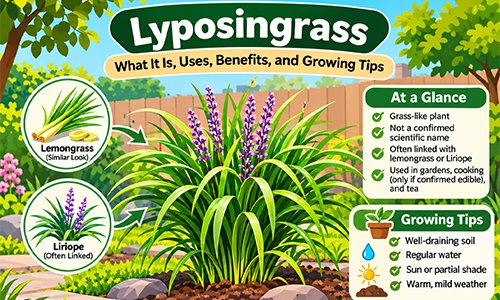
Have you seen the word Lyposingrass online and wondered what it means? You are not alone. The name appears on some plant and garden websites. Yet, there is still some confusion about which plant this name really describes.
Some sources connect Lyposingrass with lemongrass. Others use the name for Liriope, a popular garden plant. This can make things confusing. Both plants have long, green leaves. Still, they are very different plants with different uses.
In this guide, we will make things simple. We will explain what Lyposingrass may be, what it looks like, and how people use it. We will also cover its possible benefits, safety, growing needs, and basic plant care.
What Is Lyposingrass?
Lyposingrass is a name found on some gardening and plant websites. It is often used for a plant with long, narrow leaves. Some descriptions say the plant looks like grass and grows in thick groups.
The important thing to know is that Lyposingrass is not a clear scientific plant name. It may be a local name, a selling name, or a word that became popular online. Different websites may use it for different plants.
This is why you should not identify a plant by this name alone. Look at the label when buying one. A scientific name can tell you exactly which plant you have and how you should care for it.
Is Lyposingrass a Real Plant?
A real plant may be sold under the Lyposingrass name. However, as of 2026, the name itself does not clearly point to one known plant species. This is where much of the online confusion starts.
Plants often have common names and scientific names. For example, Cymbopogon citratus is a well-known type of lemongrass. Liriope muscari is a garden plant often called lilyturf. These names give us a much clearer plant identity.
So, seeing Lyposingrass on a plant label does not mean the plant is fake. It simply means you should look deeper. Find the scientific name before deciding how to grow, eat, or use the plant.
Lyposingrass vs Lemongrass and Liriope
Lyposingrass is sometimes linked with lemongrass because of its long leaves. Some online descriptions also mention a fresh lemon smell. Lemongrass belongs to the Cymbopogon group and is widely grown in warm areas.
Some types of lemongrass are used in soups, curries, sauces, and tea. The plant has a strong citrus smell. If your Lyposingrass is really an edible lemongrass species, it may have these same uses.
Other sources connect Lyposingrass with Liriope. Liriope is mainly a garden plant. Common types include Liriope muscari and Liriope spicata. Liriope can grow in thick clumps and may produce small purple, violet, or white flowers.
| Feature | Lyposingrass | Lemongrass | Liriope |
|---|---|---|---|
| Identity | Unclear | Cymbopogon group | Liriope group |
| Leaves | Long and narrow | Long and blade-like | Long and narrow |
| Smell | Not confirmed | Citrus smell | No strong citrus smell |
| Main use | Depends on plant | Food and gardens | Gardens |
| Food use | Not confirmed | Some types are edible | Mainly ornamental |
| Flowers | Depends on plant | Less important | Purple, violet, or white |
What Does Lyposingrass Look Like?
There is no one exact look for Lyposingrass because its plant identity is unclear. Still, most online descriptions show or describe a grass-like plant. Long, thin, green leaves are its most common feature.
If the name refers to lemongrass, the leaves may grow from a thick base. They can stand tall or bend outward. Crushing a suitable part of real lemongrass normally gives off a clear lemon or citrus smell.
If Lyposingrass means Liriope, the look is different. Liriope often forms neat clumps. It can grow around paths and flower beds. Some types produce purple, lavender, violet, or white flower spikes. Dark fruits may appear later.
Common Uses of Lyposingrass
The use of Lyposingrass depends fully on which plant you have. If it is Liriope, its main purpose is garden beauty. Gardeners may grow it beside paths, around trees, along borders, or across shady areas.
Liriope can also work as ground cover. Its thick leaves can fill empty garden spaces and give them a clean look. Some types stay in clumps. Others, such as Liriope spicata, can spread into a larger area.
If the plant is confirmed as edible lemongrass, its use can be very different. It may be added to food or made into tea. Never use an unknown Lyposingrass plant in food just because it looks or smells like lemongrass.
Possible Lyposingrass Benefits
You may find websites that talk about Lyposingrass health benefits. Some mention natural plant compounds, antioxidant effects, or help against certain microbes. These claims need to be read with care.
Much of this type of information seems to come from research on lemongrass, rather than research on a confirmed plant called Lyposingrass. A benefit found in lemongrass cannot simply be given to every plant sold under another name.
There are also claims about detox, weight loss, and better health. Strong claims need strong proof. Lyposingrass should never be used to treat an illness when its identity is not even clear. Knowing the exact plant must always come first.
Is Lyposingrass Safe to Eat or Drink?
This is one of the most important questions. Do not eat Lyposingrass until you know its exact scientific name. Two plants can look almost the same but have very different uses and safety rules.
If your plant is confirmed as an edible lemongrass species, suitable parts may be used in cooking or tea. But a plant bought only for garden use should not be turned into food or a drink without proper identification.
Unknown herbs may cause stomach trouble, skin problems, or an allergic reaction. Strong oils and extracts can also act differently from fresh plants. When the plant name is unclear, the safest choice is simple: identify it first and use it second.
How to Grow Lyposingrass
Growing Lyposingrass starts with one important step. You need to know which plant you have. If it is lemongrass, it will enjoy warm weather and lots of sun. If it is Liriope, its needs can be different.
Liriope can grow in sun or partial shade. Many types also do well under trees. Spring or early fall can be a good time for planting. Give each plant enough space so the roots and leaves can grow well.
After planting, water the soil well. Keep an eye on young plants while their roots settle. Do not keep the ground very wet. Too much water can hurt the roots and lead to poor growth.
Lyposingrass Water, Soil, and Sunlight Needs
Water needs depend on the real plant. Young plants need regular water while they settle. Older Liriope plants can often handle short dry times. Lemongrass also likes regular water during warm weather.
Good soil is just as important. Lyposingrass should not sit in soil that stays wet for days. Water needs to drain away. If your garden soil is heavy, adding compost may help make it better for the roots.
Sunlight also depends on the plant. Lemongrass normally likes plenty of sun. Liriope can grow in sun or shade. In very hot places, some shade during the hottest part of the day may help protect its leaves.
Growing Lyposingrass in Pots and Indoors
You do not need a large garden to grow this plant. Lyposingrass can grow in a pot if you know its real plant type. Pick a pot that gives the roots enough room to spread.
The pot should have holes at the bottom. These holes let extra water leave the soil. Without good drainage, roots may stay wet for too long. This can cause yellow leaves, weak growth, and root problems.
Indoor lemongrass needs a bright place with plenty of light. Liriope may handle less light. Check the soil often because pots can dry faster than garden beds. Water when needed, but avoid soaking the soil every day.
Lyposingrass Care and Pruning Tips
Lyposingrass care can be simple once the plant is settled. Remove dead, dry, or badly damaged leaves when you see them. This keeps the plant looking clean and gives fresh growth more space.
If your plant is Liriope, old leaves can often be cut back before strong new spring growth starts. Use clean garden shears. Take care around new shoots because cutting them can leave damaged tips.
You usually do not need lots of plant food. Compost or a suitable garden fertilizer may help poor soil. More is not always better. Too much fertilizer can create lots of leaves without giving you better flowers.
Common Lyposingrass Growing Problems
Yellow leaves are a common warning sign. Too much water, poor drainage, low light, or old leaves may cause them. Check the soil first. If it feels wet for a long time, reduce watering and improve drainage.
Brown leaf tips may appear during hot or dry weather. Strong sun can also hurt some Liriope plants. A little shade and regular water may help. Do not simply add fertilizer because it may not fix the real problem.
Slugs and snails may eat young Liriope leaves. Wet soil can also lead to root trouble. Some plants may get leaf disease during warm, damp weather. Removing damaged leaves and improving airflow can help keep plants healthy.
How to Propagate Lyposingrass
Plant division is one of the easiest ways to make more plants. This works well for clump-forming Liriope and lemongrass. It means taking one large plant and carefully making several smaller plants from it.
Dig up a healthy clump and gently separate it. Each new part should have healthy roots and leaves or shoots. Spring can be a useful time to divide many established plants because fresh growth is starting.
Place each new section into good soil. Water it after planting. Keep the soil lightly moist while new roots settle. Do not flood it. With simple care, each small section can grow into a larger plant.
Lyposingrass Garden and Landscaping Ideas
If your Lyposingrass is Liriope, it can be very useful around the garden. You can plant it beside a path to make a neat green edge. It can also fill spaces under trees where some other plants struggle.
Liriope can work well as ground cover too. Liriope muscari usually forms clumps. Liriope spicata can spread more quickly. Knowing which one you have can save you from putting a fast-spreading plant in the wrong place.
Pots are another simple choice. You can place them near a door, patio, or garden path. Liriope also looks nice with plants that enjoy similar light and soil. Always check how large each plant may become before planting.
How to Buy Lyposingrass Safely
When buying Lyposingrass, do not trust the common name alone. Look for the scientific name on the label. It may tell you whether you are buying Liriope, lemongrass, or another plant.
This step becomes even more important when buying dried leaves, tea, oils, or powder. Read the full ingredient list. Check the maker, directions, warnings, and other product details. Avoid products that hide the actual plant name.
If a seller cannot tell you which plant is inside a product, do not use it as food or tea. A nice smell or green leaf is not enough to prove that a plant is safe to eat.
Conclusion
Lyposingrass is an interesting name, but it can also be confusing. Some sources connect it with lemongrass. Others use the name for Liriope. These plants may look similar, but they have very different uses.
Lemongrass is known for its fresh citrus smell, and some species are used in food and drinks. Liriope is mainly a garden plant. It is popular for borders, ground cover, pots, and shady garden spaces.
The simple rule is to identify the plant first. Check its scientific name before eating, drinking, planting, or caring for it. Once you know what your Lyposingrass really is, choosing the right care becomes much easier.
(FAQs)
Is Lyposingrass actually a real plant?
Lyposingrass is not a confirmed scientific plant name. Surprisingly, the name may be used online for different plants, including Liriope and plants compared with lemongrass.
Is Lyposingrass the same as lemongrass?
Not always. Some websites connect the two, but there is no clear proof they are the same plant. Check the scientific name before using it.
Can you eat Lyposingrass?
Do not eat Lyposingrass unless you know its exact plant type. A grass-like plant may look edible but could be an ornamental plant such as Liriope.
Can you make tea from Lyposingrass?
Only if the plant is clearly confirmed as a safe, edible species. Never make herbal tea from an unknown garden plant based only on its name or smell.
Is Lyposingrass easy to grow?
It depends on the real plant. Liriope is often easy to grow and needs little care. Lemongrass likes warm weather, sunlight, good soil, and regular water.
Up Next: Crackstube: Features, Guest Posts, Safety, and More
