

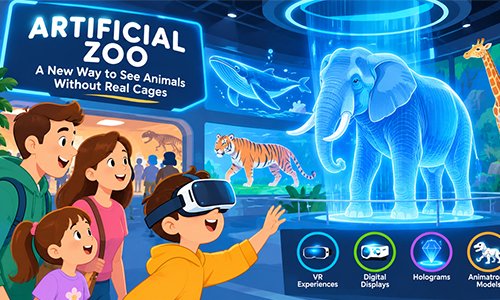
Think about walking into a zoo and seeing a huge whale swim near you. It looks close enough to touch. Yet there is no real whale in the room. What you see is made with digital tools.
This is the idea behind an artificial zoo. It can use VR and projections to show animals. Some places also use moving animal models. These tools can make wildlife feel close without putting those animals in cages.
In this guide we will explain how an artificial zoo works. We will also look at the tools used to make these animals appear real. Later we will compare these places with normal zoos and look at their good and bad sides.
What Is an Artificial Zoo?
An artificial zoo is a wildlife experience that shows animals without needing those animals to be alive at the exhibit. The animals may appear on screens or through large projections. Some can also appear through special headsets.
These places can show many kinds of animals. You may see a tiger walking through a forest. You could watch a whale swim under the sea. Some places may even show dinosaurs and other animals that no longer live today.
However not every artificial zoo is a full zoo. A museum may have one digital wildlife show. A normal zoo may also offer a VR activity beside its living animals. It is smart to check what the whole place offers before you visit.
How Does an Artificial Zoo Work?
An artificial zoo uses technology to build a wildlife scene. Large screens and projectors can place animal images around a room. Sound can make the scene feel even more real. You may hear birds or waves around you.
Some experiences allow people to move around the room. The digital scene may change as they walk. In other places the animal follows a set path. For example a digital elephant may walk across the same area during each show.
This difference is worth checking. A moving animal is not always an animal you can interact with. Before buying a ticket find out what visitors can actually do. Good information can help you know what to expect.
Technology Used in an Artificial Zoo
An artificial zoo can use several kinds of technology. One common tool is virtual reality or VR. Visitors wear a headset that places a digital world in front of their eyes. It may feel like entering a forest or ocean.
Augmented reality or AR works in another way. It adds digital objects to the space around you. Mixed reality can go further. It can make a digital animal seem like it is standing and moving inside the real room.
Some attractions do not use headsets at all. They may use large projections or special glasses. Others use animatronics. These are physical animal models with parts that can move. They may turn their heads or move their mouths.
Artificial Zoo and Virtual Reality
VR can make an artificial zoo feel very different from a normal animal display. Put on a headset and you may suddenly feel like you are underwater. A shark could swim past while fish move around you.
VR can also take visitors to places that are hard to visit in real life. A person may explore the deep sea or a faraway forest. The experience can show animals in a setting that looks like their natural home.
But VR is not right for everyone. Some people may feel dizzy or sick while using a headset. Children may also need to meet age or size rules. Visitors should read the attraction’s safety rules before starting.
Artificial Zoo vs Traditional Zoo
A traditional zoo has living animals. Their actions cannot be fully planned. A lion may sleep during your visit. A monkey may hide from view. This is part of watching a real animal behave on its own.
An artificial zoo is more planned. A digital lion can appear at a set time. A whale can swim past visitors during every show. This can make the experience easier to control and repeat for each group.
Still these experiences are not the same. A digital animal cannot fully replace watching a living animal make its own choices. At the same time digital wildlife can show scenes that would be very hard or unsafe to see in person.
Up Next: Who Is Michael Hope? Meet Mena Suvari’s Husband
Popular Artificial Zoo Experiences
Real attractions already show how different this idea can be. Hologram Zoo in Brisbane uses projected animals and themed experiences. Visitors can see wildlife and other creatures without those displayed animals being alive in the room.
London’s Natural History Museum has also offered Visions of Nature. It uses mixed reality to let visitors explore ideas about nature in the future. Visitors use headsets while still being able to see parts of the real space around them.
Milwaukee County Zoo offers another type of experience. It has VR activities such as Gorilla Trek and Shark Dive inside a traditional zoo. This shows an important point. An artificial wildlife experience can exist inside a place that also keeps real animals.
These examples give us a clear picture of what an artificial zoo can be. But seeing digital animals is only one part of the story. The next question is even more important: what can people learn from these experiences?
What Can Children Learn From an Artificial Zoo?
An artificial zoo can make learning feel like an adventure. Children can see where animals live and what they eat. They can also learn how animals move and survive in nature. A digital scene can make these lessons easier to see.
For example, children may enter a digital ocean. They could see a sea turtle swim near plants and fish. The experience may then show what happens when the water becomes dirty. This can turn a simple animal show into a useful lesson.
Still, good pictures are not enough. A strong experience should explain what children are seeing. It should use correct facts and simple words. Children should leave knowing something new about animals, nature, or the world around them.
Can an Artificial Zoo Help Animals?
An artificial zoo does not need to keep living animals for its digital displays. A virtual tiger does not need food or a cage. It also does not need medical care. This makes the experience very different from keeping a real tiger.
Digital wildlife can also help people care about nature. A show may explain why forests are being lost. It may show how dirty water can hurt sea life. These stories can help visitors understand problems that animals face in the wild.
However, showing a digital animal does not save a real one. Real wildlife still needs safe land, clean water, and expert care. If an attraction says it supports animals, visitors should check how that support really works.
Up Next: Peta Gibb: Everything to Know About Andy Gibb’s Daughter
Benefits of an Artificial Zoo
One big benefit is that digital animals can appear when needed. You do not have to wait for a sleeping lion to wake up. A planned show can make sure every visitor sees the main animals and scenes.
An artificial zoo can also show animals that are hard to see safely. Imagine standing beside a huge whale or watching a shark swim close to you. Technology can create these moments without placing a person or animal in danger.
It can even bring extinct animals back in digital form. Visitors may see dinosaurs or animals that disappeared long ago. Of course, these are models based on what we know. They are not perfect copies of the real animals.
Problems With Artificial Zoo Experiences
There are some downsides too. Tickets can cost more when special equipment is used. A venue may also charge a separate fee for a VR show. Families should check the full price before they book their visit.
Technology can also fail. A headset may stop working. A projector may have a problem. Some people may feel sick or dizzy in VR. Others may simply dislike wearing something heavy on their head.
Ads can also make an experience look bigger than it really is. A video may show a huge digital elephant. The real visit may be a short show in one room. Checking session times and visitor photos can help set fair expectations.
Is an Artificial Zoo Safe for Kids?
Many artificial zoo experiences can be fun for children. Still, each attraction has its own rules. Some VR headsets are not made for very young children. A venue may set a minimum age because of headset size or safety needs.
The scenes also matter. A large shark coming toward a child may look exciting in an ad. For some children, it may feel scary. Dark rooms and loud sounds can also make younger visitors uncomfortable.
Parents should check the age rules before booking. Ask if an adult can stay close. It is also useful to know if a child can leave early. A fun family trip should not become stressful because a child feels trapped.
How to Plan an Artificial Zoo Visit
Start by checking what kind of experience you are booking. Is it VR, mixed reality, projection, or moving models? Also check if the place has real animals. This matters if you want a visit with only digital wildlife.
Next, look at the full cost. Check entry fees, VR fees, parking, and other charges. Find out how long the actual experience lasts. A 50-minute booking may include setup and safety instructions, not 50 minutes of animal viewing.
Accessibility matters too. Ask about seats, steps, headsets, sound, and captions. Check whether visitors need to stand or hold a controller. These small details can make a big difference when planning a comfortable visit.
The Future of Artificial Zoos
Artificial wildlife may become much more lifelike in the coming years. Better screens and headsets can make animals look clearer. Mixed reality may also make digital creatures appear to move more naturally through a real room.
AI may play a role too. In the future, a digital animal could react to what visitors do. A virtual monkey might notice where a person stands. A digital guide could also answer simple questions about animals and their homes.
Still, better technology should not be the only goal. The best artificial zoo should also teach something useful. Beautiful animals are fun to watch, but clear facts and good stories can turn a short show into a lasting lesson.
Conclusion
An artificial zoo gives people a new way to explore wildlife. It can use VR, projections, mixed reality, and moving models. These tools can bring whales, sharks, tigers, and even extinct animals close to visitors.
Yet digital wildlife and real wildlife are different. A computer-made elephant cannot replace a living elephant. It can, however, help people learn about the animal and understand the problems its wild relatives may face.
Before visiting, check the format, price, age rules, and safety details. Know what your ticket includes. With a little planning, an artificial zoo can be a fun and useful way to discover the animal world in 2026.
(FAQs)
Does an artificial zoo have real animals?
Usually, the displayed animals are not real. They may be digital images, projections, VR animals, or moving models. However, some real zoos also have artificial zoo experiences inside them.
Can you see extinct animals in an artificial zoo?
Yes. This is one amazing feature. Digital tools can show dinosaurs and other extinct animals. These animals are created from scientific ideas, so their exact look may not be fully known.
Is an artificial zoo safe for children?
It can be safe, but age rules vary. Some VR headsets are not made for young children. Loud sounds, dark rooms, or large digital animals may also scare some kids.
Can an artificial zoo replace a real zoo?
Not fully. An artificial zoo can teach people about wildlife without displaying living animals. However, digital animals cannot show the free and changing behavior of a real living animal.
Can artificial zoos really help save wildlife?
They can help people learn about wildlife and nature. Some may also support conservation groups. However, a digital animal cannot protect real wildlife by itself. Real conservation work is still needed.
Up Next: Oronsuuts: What It Means and Why It Matters in Mongolia
